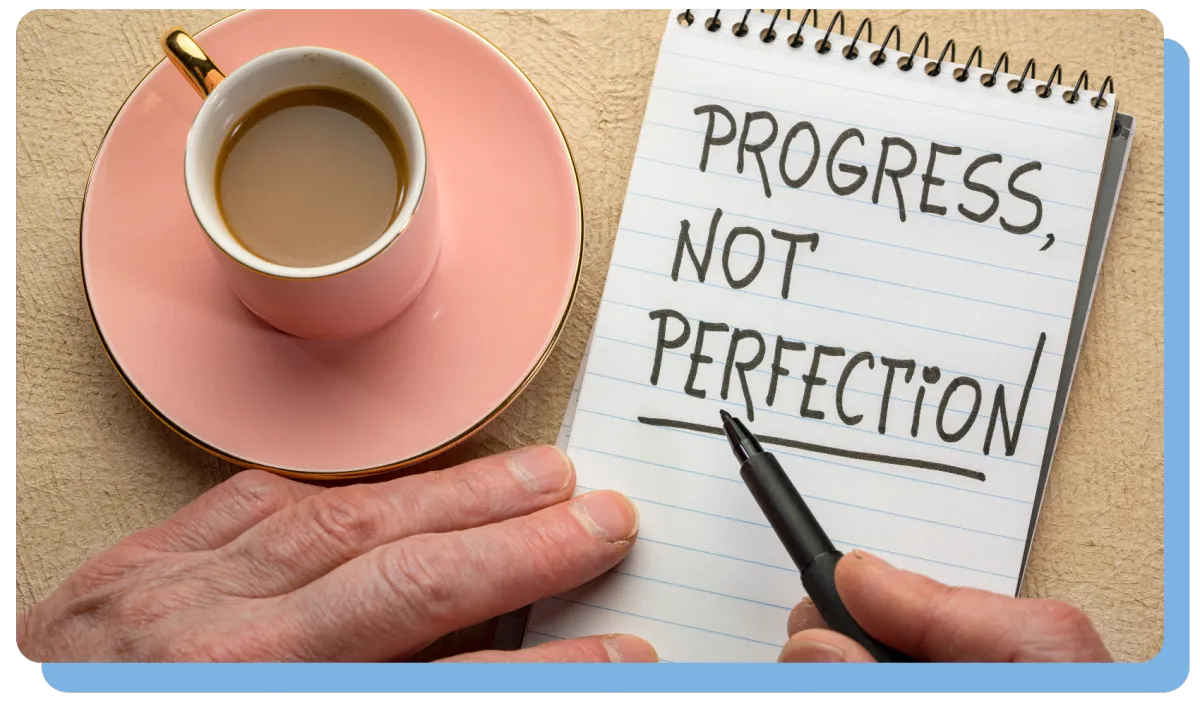
Progression Over Perfection
Progression is one of those ideas that sounds simple the moment you hear it, yet it changes the way people work once they begin to apply it. Positive Leadership teaches that perfection is never possible and progression is always possible. Leaders see this play out every day. When people chase perfection, they freeze. When people commit to progression, they move. That movement brings clarity, energy, and healthier engagement with the work in front of them.
Most of us have been pulled into perfectionism at some point. It shows up in the hesitation to start something, the endless polishing of work that already meets the need, or the belief that mistakes carry outsized consequences. The problem is not that people want to do well. The problem is that perfection becomes a barrier that blocks action. Progression removes the barrier. It allows people to take useful steps that move their situation closer to thriving.
Progression matters because outcomes are created through action. Action produces the conditions that create traction. Traction builds confidence. Confidence encourages people to keep going. This is how leaders help their teams move from struggle into forward motion.
Why Perfection Stalls Growth
Perfectionism does more than slow things down. It narrows a person’s engagement with their resources. Engagement is the way we pledge our time, energy, and attention toward the outcomes we want. When someone is stuck in perfectionism, most of their energy is spent on managing discomfort rather than advancing the work. They wait for certainty that never arrives or for ideal conditions that never appear.
The Performance Ladder offers a useful way to see how this happens. Every activity can be performed at different levels. These levels are neutral descriptions of performance. They are not judgments. Perfectionism adds judgment. It tells people that being anywhere other than advanced or strong is unacceptable. The moment that judgment takes hold, learning slows. People become less willing to take the steps that build basic competence or strengthen their skills. They begin protecting their identity instead of improving their performance.
Leaders who recognize this pattern can intervene by re-centering the conversation on growth rather than evaluation. When the Performance Ladder is used as a tool for movement rather than as a scorecard, people feel more freedom to try, experiment, and learn.
Progression Creates Traction
Traction is one of the most important turning points on the Alignment Meter. It is the point where a situation begins to settle, steady progress becomes visible, and outcomes start moving in the right direction. What surprises many leaders is how often traction comes from small steps rather than dramatic shifts.
Small wins have power. They create proof that the situation is changing, even if the change is modest. They also pull people back into meaningful engagement, which strengthens alignment. Alignment allows resources to move in the same direction. When that happens, performance improves.
A team that waits for the perfect plan stays in contrast. A team that begins taking steps, even while the plan is still forming, creates movement. Over time, those steps accumulate. They build a sense of agency and capacity. They help people recover confidence after a difficult season. Progression turns the focus toward what is possible right now, which opens the door for traction to appear.
The Psychology of Progression
Progression is both a leadership practice and a psychological shift. People often think they need to feel confident before taking action. In reality, people gain confidence because they take action. A single completed step reduces anxiety, which creates room for clearer thinking. That clarity makes the next step easier.
This pattern aligns with how humans learn. Growth rarely happens in a single leap. It unfolds through repeated cycles of trying, adjusting, and trying again. Progression gives people permission to be in that cycle without feeling like they are failing.
This is one reason Positive Leadership emphasizes what thriving looks like. When people understand the outcomes that matter, they can see how each step contributes to something meaningful. They stop evaluating themselves through the lens of perfection and begin evaluating their work through the lens of alignment. This change helps people recover motivation and stay present during difficult periods.
What Leaders Can Do
Leaders set the tone for progression. When a leader models unrealistic perfectionism, the team absorbs it immediately. When a leader models steady movement, the team absorbs that as well. Leaders who openly practice progression make it easier for others to do the same.
There are several ways leaders can reinforce this mindset:
Make outcomes clear. When outcomes are well understood, people know what progress looks like.
Use the Performance Ladder as a growth tool. Treat it as a way to understand the next level, not as a measure of worth.
Highlight movement. Acknowledge steps that create forward motion, even small ones.
Share your own process. Let people see how you work through a challenge instead of waiting until it is polished.
Support people during struggle. Struggle is part of growth, and naming it reduces fear.
Point out traction when it appears. When people see the shift, their motivation increases.
These practices help teams stay engaged and aligned. They also reduce the anxiety that often slows performance during periods of change.
The Freedom of Progression
Progression frees people from impossible expectations and replaces them with a path that is both realistic and energizing. It honors the way people learn and the way situations improve. It also reinforces the core principles of Positive Leadership. Movement produces outcomes. Engagement fuels alignment. Alignment supports thriving.
Once perfection is removed from the expectations people place on themselves, they regain the space to experiment, to learn, and to adjust. They discover that momentum is available even in difficult circumstances. They begin to see growth where they previously saw only pressure.
Progression is not a shortcut. It is a discipline. It involves steady attention, small moves, and consistent engagement with the outcomes that matter. Leaders who foster this discipline build organizations that adapt well, recover quickly, and thrive over time.