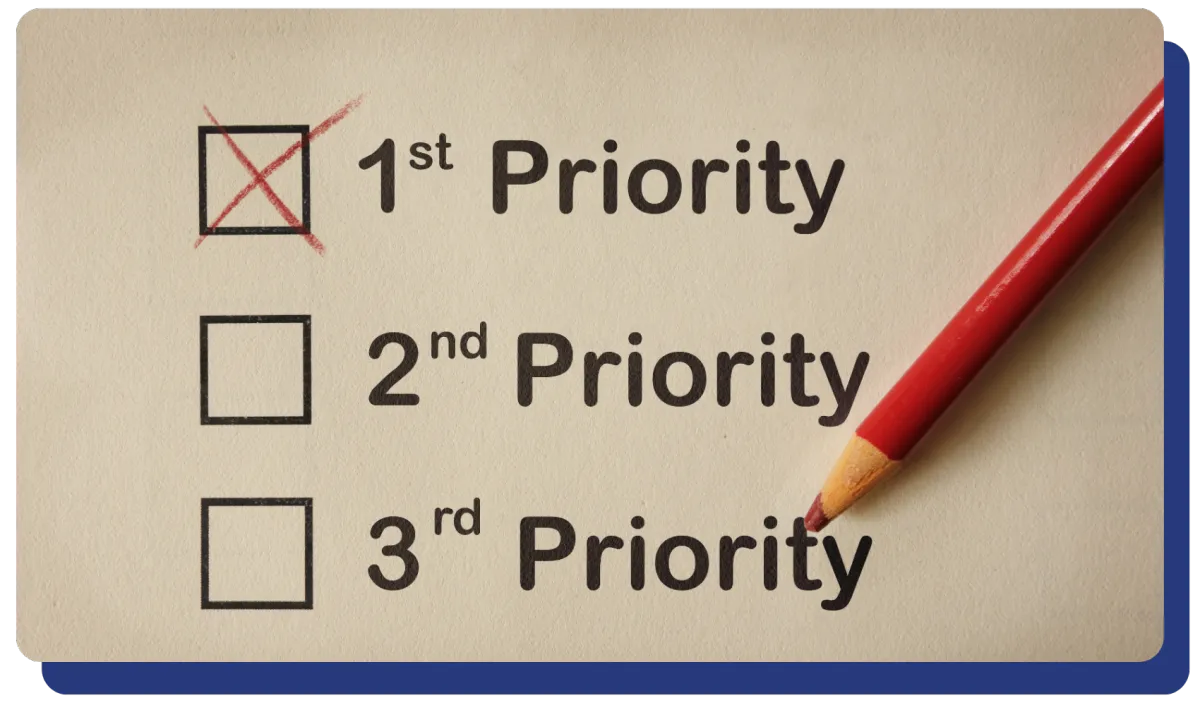
When Everything Is a Priority, Nothing Is
When a leader calls everything a priority, they have not set priorities at all. They have found a way to avoid setting them. A list of ten top priorities tells a team nothing about what to do when two of those items collide on a Tuesday afternoon, and they always collide. So the team decides for itself, guided by whoever pushed hardest in the last meeting or whichever deadline is closest, and the leader steadily loses the one thing a priority is supposed to provide: real control over where the organization's limited attention goes.
Most leaders know this in the abstract and still keep the list long. The reasons are worth looking at, because they explain why priority overload is so common and so hard to fix.
Why Everything Feels Safer Than Choosing
Choosing a priority means saying no to something, and saying no in public means being exposed if the thing you cut turns out to be the one that counted. A long list avoids that risk. It also avoids the uncomfortable conversation with the person whose project would be set aside. Naming ten priorities lets a leader look ambitious while keeping every stakeholder calm, and it puts off the hard call for another week. For a while this feels like leadership, but it works more like conflict avoidance that has borrowed the vocabulary of strategy.
The problem is that the hard call does not disappear; it moves down instead. Someone still has to decide what actually gets worked on this week, and if the leader will not, a junior person makes that decision by default, without the context or the authority to make it well. The organization is still choosing its priorities. It has pushed the choosing to the people least equipped to do it, and then wonders why execution feels random.
What Priority Overload Does to a Team
The word priority was singular for most of its history. For centuries English had one priority, the single thing that came before everything else. The plural entered common use in the last hundred years, and the habit of claiming many priorities at once is younger still. The word changed because leaders wanted to pursue everything without choosing, and the language stretched to let them feel like they could.
A team handed ten priorities works on all of them and finishes almost none. Attention splits across all ten of them. People switch between projects all day, and every effort crawls at a fraction of the speed it could reach. The most conscientious employees suffer the worst, because they try to honor the whole list and grind themselves down attempting the impossible. Meanwhile, the two or three things that would genuinely change the company's position compete for attention with seven things that never will, and they advance as slowly as everything else.
Picture a product team told that five features all ship this quarter. With no ranking among them, the team spreads its best engineers across all five. Each feature lands late and rough, the launch that mattered most is no better than the four that did not, and the quarter ends with a lot of motion and little to show. A leader who had named one feature as the priority would have shipped that one well and kept the rest for later. The team could have delivered any one of those features well. What failed was the instruction to treat all five as equal.
Priority overload also teaches people to stop believing the label. When the tenth message of the month calls something the top priority, the word has already lost its meaning, and employees learn to wait and see which supposed priority the leader actually chases. The cost surfaces later, during a real emergency, when the leader needs the team to drop everything and finds that no one moves with any urgency. The word was spent on things that did not deserve it.
How to Tell a Real Priority From a Wish
The test of a real priority is simple to state and hard to face. What are you willing to sacrifice for it? If the answer is nothing, the item is a wish that has borrowed the word priority. Real priorities come with a cost that someone can name. Other good ideas have to wait their turn, and some reasonable requests get turned down so the chosen work can move. A leader who cannot say what they are giving up has not actually decided anything.
A short exercise makes this concrete. Ask a manager to list their priorities, then ask which single effort they would protect if the quarter fell apart and they could save one. The answer they give without hesitation is the real priority. Everything else was a hope wearing the same label, and naming the difference out loud is usually the first honest moment in the whole conversation.
Priorities and alignment meet at this point. In the Positive Leadership view, a team thrives when its purpose, its outcomes, and its methods point in the same direction. A pile of competing priorities breaks that line, because people cannot trace their daily work back to a single clear intent. They are busy, and busyness feels productive, but the effort scatters and never adds up. In the Positive Leadership sense, alignment is a structural condition, the state where everyone's work pulls toward the same outcome. Agreement in a meeting can feel like alignment without being it, and real alignment becomes impossible when the outcome is a list of ten.
What Choosing Actually Looks Like
The leaders who handle this well start by naming what comes first in plain language, usually one outcome or a very short set of them, and they make the tradeoff explicit. Saying "we are investing in retention this quarter, which means the new market waits until next" gives a team something it can act on. Saying "retention and new markets are both critical" gives them nothing but permission to guess, and they will guess in ten different directions.
They also protect the priority when it collides with something merely urgent. Urgency is loud, and priorities rarely shout, so without protection the urgent thing wins every time and the important thing never gets the team's best hours. That protection is the leader's job because no one lower in the organization has the standing to tell a demanding stakeholder that their request will have to wait.
The last piece is revisiting priorities on a deliberate schedule. A priority should change when the situation genuinely changes. An anxious message on a Friday is not a change in the situation, and a leader who reshuffles the whole list every time pressure spikes teaches the team that nothing is ever settled, which is the exact confusion a clear priority was meant to end.
A chief operating officer I worked with cut her team's priority list from eleven to three and told everyone plainly that the other eight were on hold, still alive but not being worked on now. The relief in the room was immediate. People had known for months that eleven was fiction, and they had been choosing on their own and feeling bad about whatever they let slip. Naming the three did not lower the team's ambition. It gave their effort a direction, and those three moved faster than the eleven ever had.
The next planning cycle will bring the same temptation, another slide filling up with bold, competing goals. The question worth sitting with is which of those goals the organization will choose not to pursue, and whether the leader will name that choice in the room. That is the moment a list turns into a decision, and the team finally learns where its best hours belong. Ten things that were never really priorities stop pulling those hours in every direction.
When a leader calls everything a priority, they have not set priorities at all. They have found a way to avoid setting them. A list of ten top priorities tells a team nothing about what to do when two of those items collide on a Tuesday afternoon, and they always collide. So the team decides for itself, guided by whoever pushed hardest in the last meeting or whichever deadline is closest, and the leader steadily loses the one thing a priority is supposed to provide: real control over where the organization's limited attention goes.
Most leaders know this in the abstract and still keep the list long. The reasons are worth looking at, because they explain why priority overload is so common and so hard to fix.
Why Everything Feels Safer Than Choosing
Choosing a priority means saying no to something, and saying no in public means being exposed if the thing you cut turns out to be the one that counted. A long list avoids that risk. It also avoids the uncomfortable conversation with the person whose project would be set aside. Naming ten priorities lets a leader look ambitious while keeping every stakeholder calm, and it puts off the hard call for another week. For a while this feels like leadership, but it works more like conflict avoidance that has borrowed the vocabulary of strategy.
The problem is that the hard call does not disappear; it moves down instead. Someone still has to decide what actually gets worked on this week, and if the leader will not, a junior person makes that decision by default, without the context or the authority to make it well. The organization is still choosing its priorities. It has pushed the choosing to the people least equipped to do it, and then wonders why execution feels random.
What Priority Overload Does to a Team
The word priority was singular for most of its history. For centuries English had one priority, the single thing that came before everything else. The plural entered common use in the last hundred years, and the habit of claiming many priorities at once is younger still. The word changed because leaders wanted to pursue everything without choosing, and the language stretched to let them feel like they could.
A team handed ten priorities works on all of them and finishes almost none. Attention splits across all ten of them. People switch between projects all day, and every effort crawls at a fraction of the speed it could reach. The most conscientious employees suffer the worst, because they try to honor the whole list and grind themselves down attempting the impossible. Meanwhile, the two or three things that would genuinely change the company's position compete for attention with seven things that never will, and they advance as slowly as everything else.
Picture a product team told that five features all ship this quarter. With no ranking among them, the team spreads its best engineers across all five. Each feature lands late and rough, the launch that mattered most is no better than the four that did not, and the quarter ends with a lot of motion and little to show. A leader who had named one feature as the priority would have shipped that one well and kept the rest for later. The team could have delivered any one of those features well. What failed was the instruction to treat all five as equal.
Priority overload also teaches people to stop believing the label. When the tenth message of the month calls something the top priority, the word has already lost its meaning, and employees learn to wait and see which supposed priority the leader actually chases. The cost surfaces later, during a real emergency, when the leader needs the team to drop everything and finds that no one moves with any urgency. The word was spent on things that did not deserve it.
How to Tell a Real Priority From a Wish
The test of a real priority is simple to state and hard to face. What are you willing to sacrifice for it? If the answer is nothing, the item is a wish that has borrowed the word priority. Real priorities come with a cost that someone can name. Other good ideas have to wait their turn, and some reasonable requests get turned down so the chosen work can move. A leader who cannot say what they are giving up has not actually decided anything.
A short exercise makes this concrete. Ask a manager to list their priorities, then ask which single effort they would protect if the quarter fell apart and they could save one. The answer they give without hesitation is the real priority. Everything else was a hope wearing the same label, and naming the difference out loud is usually the first honest moment in the whole conversation.
Priorities and alignment meet at this point. In the Positive Leadership view, a team thrives when its purpose, its outcomes, and its methods point in the same direction. A pile of competing priorities breaks that line, because people cannot trace their daily work back to a single clear intent. They are busy, and busyness feels productive, but the effort scatters and never adds up. In the Positive Leadership sense, alignment is a structural condition, the state where everyone's work pulls toward the same outcome. Agreement in a meeting can feel like alignment without being it, and real alignment becomes impossible when the outcome is a list of ten.
What Choosing Actually Looks Like
The leaders who handle this well start by naming what comes first in plain language, usually one outcome or a very short set of them, and they make the tradeoff explicit. Saying "we are investing in retention this quarter, which means the new market waits until next" gives a team something it can act on. Saying "retention and new markets are both critical" gives them nothing but permission to guess, and they will guess in ten different directions.
They also protect the priority when it collides with something merely urgent. Urgency is loud, and priorities rarely shout, so without protection the urgent thing wins every time and the important thing never gets the team's best hours. That protection is the leader's job because no one lower in the organization has the standing to tell a demanding stakeholder that their request will have to wait.
The last piece is revisiting priorities on a deliberate schedule. A priority should change when the situation genuinely changes. An anxious message on a Friday is not a change in the situation, and a leader who reshuffles the whole list every time pressure spikes teaches the team that nothing is ever settled, which is the exact confusion a clear priority was meant to end.
A chief operating officer I worked with cut her team's priority list from eleven to three and told everyone plainly that the other eight were on hold, still alive but not being worked on now. The relief in the room was immediate. People had known for months that eleven was fiction, and they had been choosing on their own and feeling bad about whatever they let slip. Naming the three did not lower the team's ambition. It gave their effort a direction, and those three moved faster than the eleven ever had.
The next planning cycle will bring the same temptation, another slide filling up with bold, competing goals. The question worth sitting with is which of those goals the organization will choose not to pursue, and whether the leader will name that choice in the room. That is the moment a list turns into a decision, and the team finally learns where its best hours belong. Ten things that were never really priorities stop pulling those hours in every direction.